The older houses along North Main and Augusta Road often still wear their original hardware, and some of those locks take keys that a hardware store counter has never stocked. The key in the owner's pocket is frequently a tenth-generation copy, smooth and rounded, and it works only with a particular lift of the knob.
Copying that key copies its problems. The better spare starts from the lock: a key cut to the depths the cylinder was built for, from the right blank, so the new key turns cleanly and every copy made from it afterward does too. If the old lock is past saving, that gets said plainly before anything is cut.
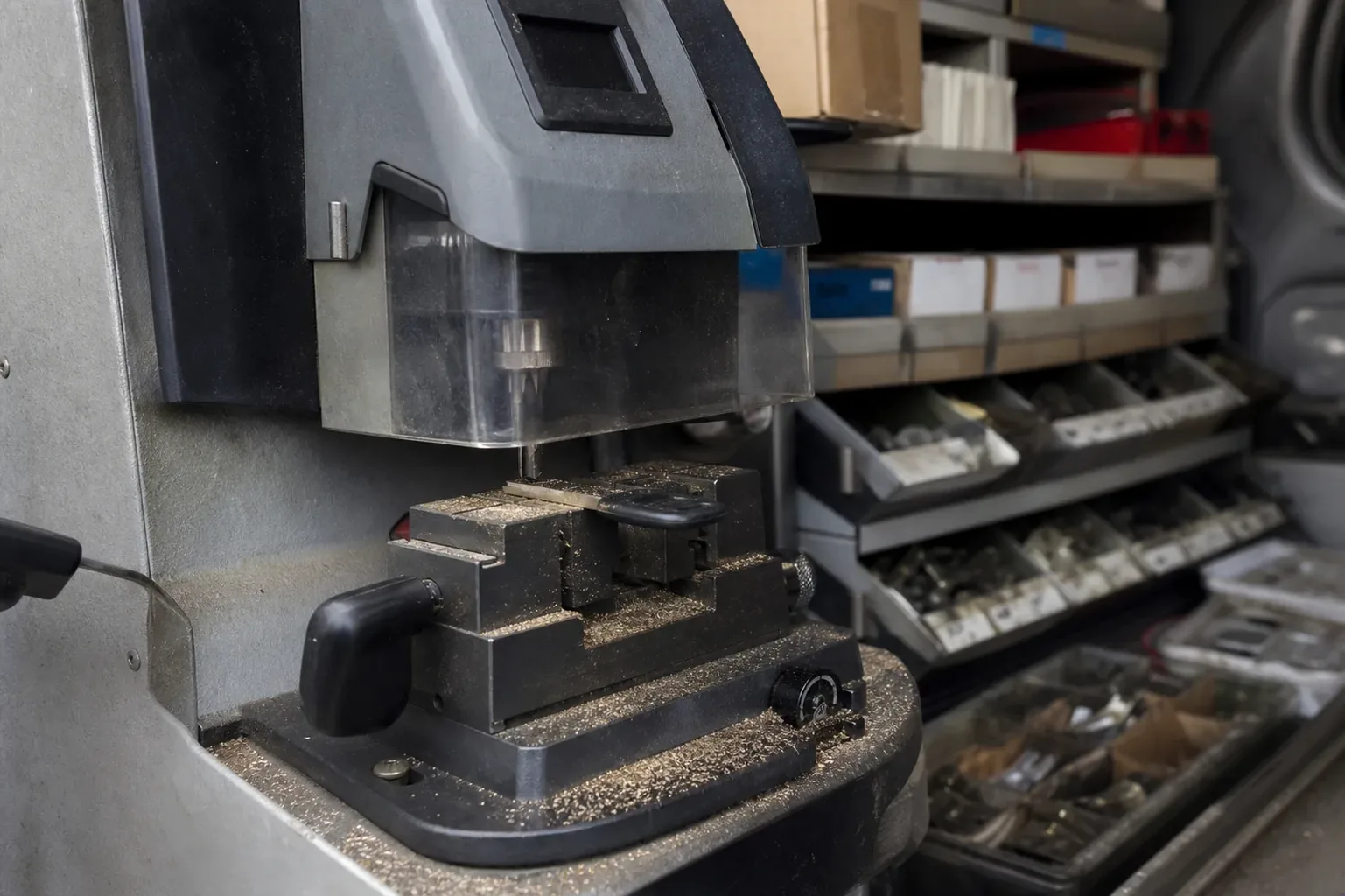
The cutting happens right outside, in the vehicle the technician drives, so your keys never leave the property and nobody waits in line at a counter. The blank has to match the lock's keyway first; after cutting, the rough edges are dressed off so nothing hangs up inside the cylinder, and the key goes into its own lock with you standing there.
When even a freshly cut key feels gritty, the cylinder is the likely culprit, and you will hear that rather than be sold more keys that fight the same lock. Servicing, rekeying or swapping the lock are all part of the free estimate, and you choose before anything else is done.
Newer subdivisions have the opposite issue: builder-grade hardware, a separate key for the front door, the door from the garage and the patio, and a ring that grows every time somebody needs a copy. Where the locks are compatible, they can be rekeyed to share one key, and the copies are cut after that so the ring stays short.
If the house came with keys from the builder, a previous owner and a few contractors, a rekey first and copies second is the cleaner order. Our home lock service covers the rekey; the spares are cut on the same visit.
Older homes tend to have more ways in than anyone expects: the front door, a back porch door, French doors onto a patio, a basement door and a garden gate. Each one tends to have its own key, and each key tends to live on a different ring. Moving into one of these houses usually means inheriting a drawer of unlabeled keys, and sorting out which one opens what is part of the visit.
A visit can cover all of them in one go, with every key labeled by door so nobody stands on the porch trying keys one by one. Padlocks on sheds and gates and the lock on the mailbox compartment are included if you want them; the carrier's own lock on a cluster box is never touched.
Upstate springs coat everything in yellow pollen, and the red clay dust that blows off construction sites and dirt roads finds its way into anything with a keyhole. Over a few seasons that grit wears keys faster and makes a cylinder feel stiff, especially on a back door or a gate that faces the weather.
Spares cut from a key that has been grinding against dirty pins carry that wear with them. If the lock is the gritty one, the technician says so and can service it before any new keys are cut, which keeps the fresh copies turning smoothly for far longer than they would in a dirty cylinder.
One stop for most houses and small offices.
Front, back, porch, garage entry, gates, mailbox and any padlocks you want covered.
Master, restricted and stamped keys wait for the owner's or manager's OK.
Each key is cut outside and cleaned up so it slides in smoothly.
Every copy is turned in its lock, then tagged by door.
Restaurants on Main Street, shops and offices near the falls turn over staff quickly, and each new hire needs keys while each departure leaves one more key out in the world. Copies for staff are routine and can be cut and labeled by person, along with desk, cabinet and storeroom keys.
Restricted systems only take new keys through the authorization their holder keeps on file, and a key stamped do not duplicate gets copied when the owner or a manager says so, not before. Building-wide key plans live on the commercial locksmith page.
Plenty of houses still keep a spare under a mat, in a planter or on top of the porch light, which is the first place anyone looks. A labeled key for each person who actually needs one, a sitter, a dog walker, a neighbor who checks the mail, is safer and easier to take back later. When a helper stops coming, their key comes back or the lock gets rekeyed, and nobody has to wonder.
Car keys and fobs are cut and programmed at the car and have their own page: car keys. Mention them on the same call if you need both, and the visit can be planned around everything at once.
Usually because it was copied from a key that had already worn smooth. A key cut to the lock itself, instead of to the worn copy, turns the way the lock intends.
Most of the time, yes. Blanks for older keyways can usually still be found, and the copy is tried in the lock before you take it.
If the locks are compatible, they can be rekeyed alike during the visit, and the copies are cut after that.
Yes, when the owner or a manager approves it. The stamp exists so they know exactly how many keys are out there.
Yes, for staff, desks, cabinets and storerooms, labeled by person or by door.
Yes, for locks you own: shed and gate padlocks and your own mailbox compartment. On cluster boxes, the carrier's lock is never touched.
A new key can be cut to the lock, or the lock rekeyed so the lost key stops working, and fresh copies are cut from there.
Yes. You hear what the job involves and agree before anything is cut.
Call and we send someone out.