Most households switch for the small daily things. Nobody stands on the porch with groceries hunting for a key. A sitter, a dog walker and the cleaning service each get their own code, and taking one away is a few taps rather than a rekey. The door can lock itself after it closes, so the question of whether someone locked up stops coming up at all.
The bigger reason shows up later. Keys get copied and lent out and nobody keeps track, while codes leave a record. On most smart locks you can see when the door opened and whose code did it.
Late nights add one more reason. Keys get dropped in a stadium lot after a game or left in a work locker after a long shift, and a code cannot be lost that way. As long as you remember it, the door opens.
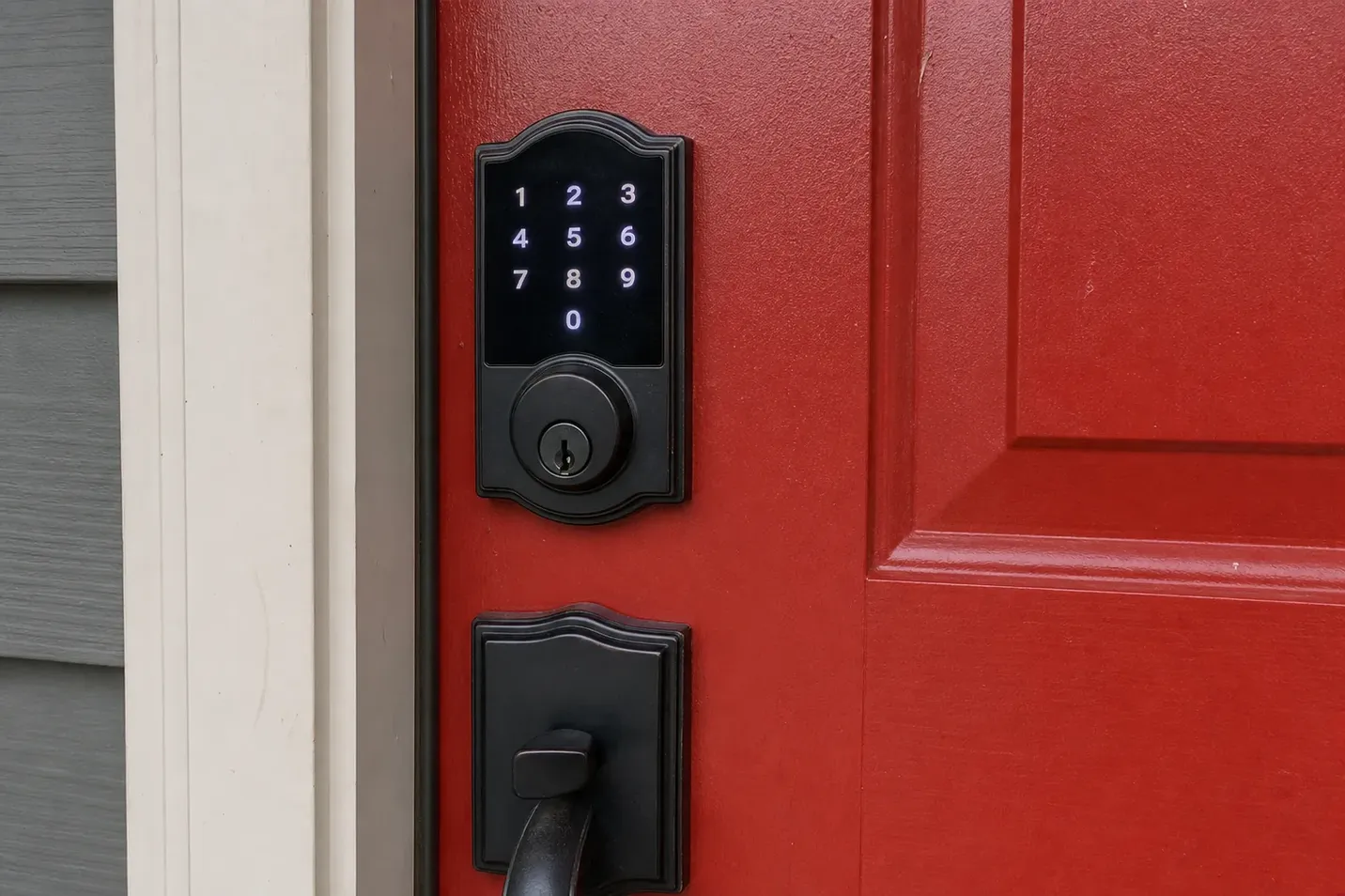
A keypad deadbolt is the plain choice: codes at the door, a key cylinder for backup, no app and nothing to connect. It suits rentals, back doors and anyone who wants the convenience without another account to manage.
An app-connected lock adds the phone. You can let someone in from work, get an alert when a door opens, and change codes from anywhere. Some connect to Wi-Fi directly; others talk to your phone over Bluetooth and rely on a small bridge plugged in near the door for anything remote.
There are also retrofit kits that replace only the inside half of an existing deadbolt. The outside keeps its original look and key, which matters on a house where the hardware matches the era of the door.
Houses on the older streets often have thick solid doors, mortise locks set deep into the edge of the door, or holes drilled for hardware that is no longer made. A standard smart deadbolt expects a round hole of a common size, and not every old door has one.
That does not rule them out. Some doors take a smart deadbolt above the original lockset, some need a hole adjusted, and some are better served by a retrofit kit that leaves the old hardware in place. French doors and narrow porch doors need extra care because their frames leave little room for a keypad. The technician looks at the door first and tells you which option fits before anything is drilled.
Newer homes in the growing suburbs often come with a keypad already on the door. The trouble is who else knows the code: the builder, the realtors, the inspector and every trade that needed to get in before closing. Many of those locks were never reset.
A builder keypad can usually be cleared and programmed again with only your household's codes, and the strike tuned so the bolt throws smoothly. If the lock is a basic model and you want app control, it can be swapped for one that offers it, on the same holes.
One visit for most houses.
Its thickness, the holes already in it, and how the bolt meets the frame.
Keypad, app-connected or retrofit, chosen with you after the free estimate.
Each person's code entered, the app paired, any old or builder codes wiped.
Every code and the backup key tested with the door open and closed.
Summer humidity swells wooden doors, and a bolt that drags against its strike makes the motor in a smart lock work harder on every cycle. That drains batteries and can leave the bolt short of locking. Setting the strike so the bolt moves freely, with room for the door to swell, prevents most of it.
A keypad in full afternoon sun runs hot all summer, which shortens battery life. The occasional winter ice storm does the same thing from the other direction. Either way the lock warns before the batteries quit, and a key backup is always there.
Near the colleges and across town, plenty of houses are rented, some by the room. A keypad on the front door means each tenant has a code and nobody leaves with a key at the end of the lease. With an app-connected lock, a landlord can add and delete codes between tenants without a trip to the house.
Tenants need the owner's OK before a lock is changed, and owners with several properties often pick one lock model for all of them so codes are handled the same way everywhere.
Short-term rentals benefit the most. Each guest can get a code that starts at check-in and stops working at checkout, so there is no lockbox to manage and no key that leaves with a guest by mistake.
A smart lock that goes dark, beeps without turning or drops off the app usually has a simple cause: batteries that ran down after weeks of warnings, a bolt binding on its strike, or a bridge that lost the network after a router change. Tell us what the lock does, and the visit starts with the likeliest cause.
If it leaves you outside, it is handled like any lockout: ID first, then the door, then a look at the lock so it does not happen again.
Often, but not always the usual way. Some old doors take a smart deadbolt in existing holes, some need adjusting, and some are better with a retrofit kit that keeps the original hardware. You hear which before any drilling.
Once its codes are cleared and reprogrammed, yes. Until then, anyone who had the builder's or the last owner's code may still get in.
Not for a keypad deadbolt. Wi-Fi or a bridge only matters if you want to unlock from your phone or get alerts away from home.
Most locks warn for weeks first, and every lock we install keeps a key backup. Keep that key somewhere outside the house.
Sometimes. Narrow frames leave little room for a keypad, so the door is measured first and the options explained before anything is ordered or drilled.
Yes. Most locks hold many codes, each removable on its own, and many can limit a code to certain days or hours.
With the owner's or manager's OK, yes. Many landlords like keypads because codes replace rekeying between tenants.
Yes. You hear what the door needs and which locks suit it, and the free estimate comes before any work starts.
Call and we send someone out.